
Which tote should you genuinely buy? That is a murkier question here than at the average house, because the row bags are not laid out as an explicit good-better-best order. There is no logo-based ranking, no house print saved for the costlier versions, and no visible hardware declaring which model ranks above the rest. Put a $900 tote beside a $6,900 one and the visual vocabulary is identical. What divides them is leather grade, structure, size and how much hand-finishing the build demands. Below, the tote families are placed side by side using observed 2026 market prices, so you can see what those extra thousands get you.
Capacity, not model names, is where every sound tote decision opens. The range runs from a small structured carrier to a genuinely oversized weekend piece, and the gap between those extremes is wider than most imagine. Sizing follows a house convention worth memorising: any number in a model name states the bag’s width in inches, which is why Marlo 12 and Marlo 14 differ by two inches across the top. That convention extends from Margaux 10, 12 and 15 to India 10.00 and Agnes 15. Once you have fixed the width you need, you are holding two or three candidates straight away. the row handbags suede shoulder bags The rest of the decision is material and budget.
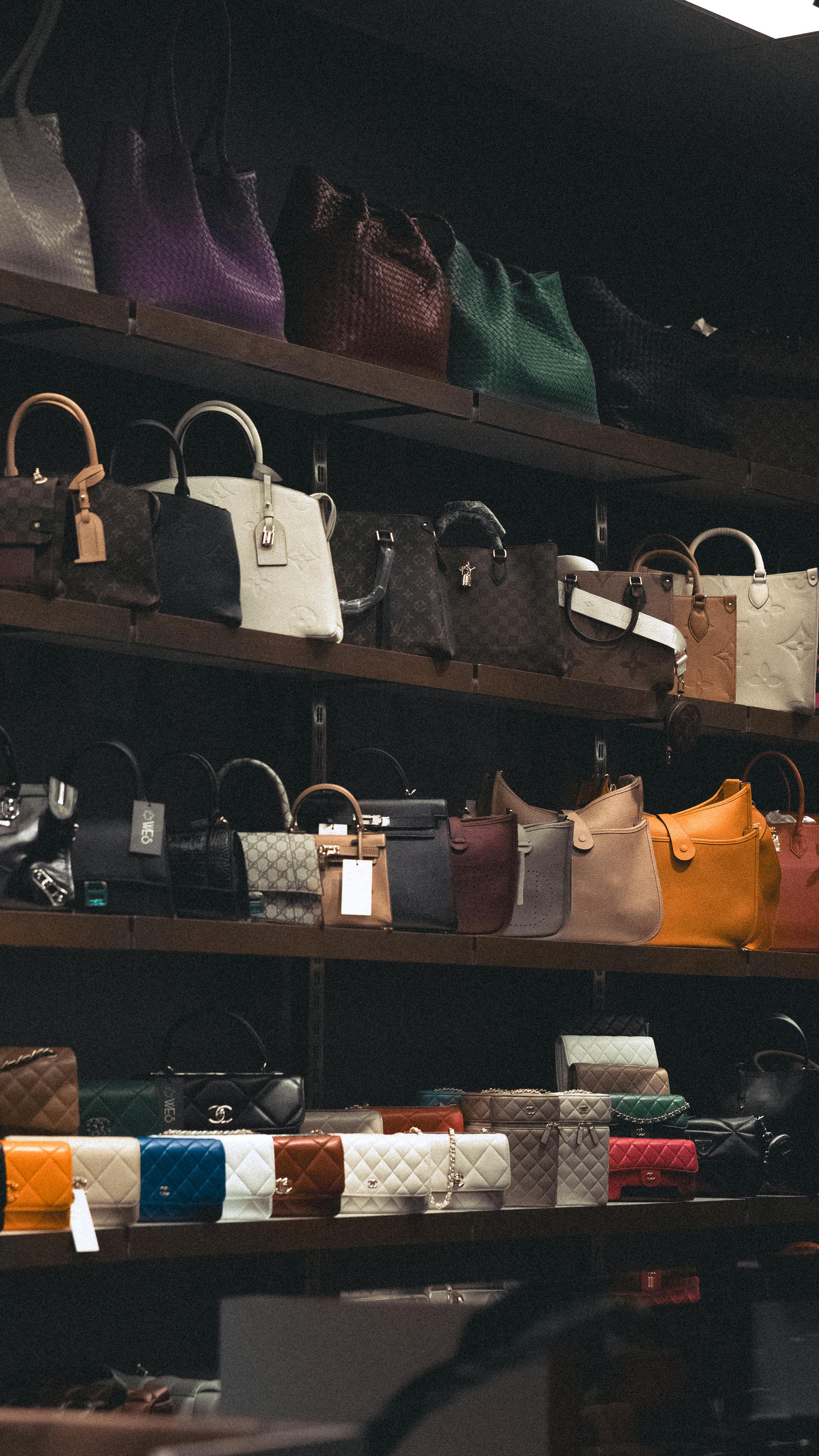
When someone says the row tote bag, they usually mean something from the Park line. Nothing in the range is more visible and the reason a soft-sided carrier hardened into a recognisable silhouette. It runs to exactly four bags plus a crossbody: the N/S Park Tote, the Park Tote, the Park Tote Three and the XL Park Tote, with the N/S Park Crossbody sitting alongside them. Names the brand does not make drift about online, so specificity pays. All share one design logic: no exterior plaque, no monogram, palladium-plated matte hardware, recognition by proportion alone. What differs between them is dimension and material, not decoration.
The N/S Park Tote is the tall, north-south cut and the family’s centre of gravity. Pricing observed in 2026 sits at roughly $1,550 to $1,620 for the small, $1,650 to $1,950 for the medium and $1,990 to $3,250 for the large. Those are ranges rather than single figures because material moves the number considerably within one size. The large in particular spans a notably wide band, which means the same silhouette is offered in markedly different hides. It also holds the strongest documented resale record in the range, which is worth factoring in if resale matters to you. For most buyers, the medium is the practical everyday choice.
In observed pricing the standard Park Tote sits just below the N/S, at roughly $1,450 to $1,620 across small and medium. The Park Tote Three comes in edge, stitch and canvas treatments and runs about $1,750 to $2,400 depending on the treatment. The XL Park Tote was observed at $2,490 and the XL Stitched at $4,570, the plainest illustration of what handwork costs here. One family, one silhouette, nearly double the price, and the difference is construction rather than size. The plain XL is the obvious pick if you want the largest format and not the stitched premium. Take the stitching and the price becomes flagship money for a tote.
Marlo sets out to do something else entirely. The Park bags read soft and collapsible; Marlo is the structured, more formal proposition, and the price makes that clear at once. Observed 2026 pricing places Marlo 12 at $3,600 and $4,900 depending on material, Marlo 14 at $5,300, and the Marlo Tote at $4,300 with a canvas version at $5,600. Look carefully at that: the canvas version costs more than the standard leather one, so material premiums in this range clearly do not follow a simple leather-beats-fabric rule. Marlo 12 to Marlo 14 is a two-inch width difference for several hundred dollars more. Pick Marlo if you want a tote that holds its shape empty and reads as a work bag, not a carryall.
Above Marlo sit the two pieces that define the ceiling. The Alger Tote was observed at $4,900 and the Marco Bag at $6,900, level with the Margaux Shoulder 12 at $4,900 and the Iowa Duffle at $5,180. Nothing at this level carries more than a large Park does. You are buying leather grade, structure and the amount of hand-finishing the construction requires. They turn up in every list of top row bags and still sell slowest, since the value case is a subtle one. Should the difference between a $2,490 tote and a $6,900 one be invisible across a room, that is by design, and probably your answer.
Stopping at the headline families would make for a poor row bags overview, because several of the most useful totes sit beyond them. Observed at $900, the Boone Tote joins the $950 Large Boone as the least expensive entry into the format. Brian Tote figures landed at $1,100 and $1,200, and Tori at $1,800. Beyond leather, the sisal family runs roughly $1,400 to $2,200, with a Georgia linen tote at $1,750 and a Geogica raffia tote at $2,500. Smaller formats take in the Cecily Mini Tote at $950, the Mini Barn Tote at $1,200 and a Small Kit Tote at $2,200. They suit buyers who want the design language without the leather outlay.
The table collects the observed 2026 prices so the families read against each other directly. Read each figure as a point-in-time market observation rather than an official tariff, as the brand publishes no master price list. Where a range appears it reflects real variation across materials within one size, not doubt about the figure. Read down the price column first, then across to character. The top of the Park range overlaps the bottom of Marlo by more than most expect. It is in that overlap that most buyers pause.
| Bag | Observed price, 2026 | Character | Ideal for |
|---|---|---|---|
| Park Tote (S/M) | $1,450-1,620 | Soft and collapsible | Relaxed daily use |
| N/S Park Tote Small | $1,550-1,620 | Tall cut | The compact commute |
| N/S Park Tote Medium | $1,650-1,950 | Tall proportion | The obvious default |
| Park Tote Three | $1,750-2,400 | Edge, stitch, canvas | Choosing a material |
| N/S Park Tote Large | $1,990-3,250 | The full size | Work and travel |
| XL Park Tote | $2,490 | Deliberately oversized | Sheer volume |
| Marlo 12 | $3,600 / $4,900 | Holds its shape | Formal work bag |
| Marlo Tote | $4,300 (canvas $5,600) | Structured | Making a statement |
| XL Park Tote Stitched | $4,570 | Handwork throughout | Craft premium |
| Alger Tote | $4,900 | Flagship level | Buying at the top |
| Marlo 14 | $5,300 | Marlo at its widest | Wide format |
| Marco Bag | $6,900 | Top of the range | A collector’s buy |
The tote conversation turns really interesting at resale, where one figure dominates. The Rebag CLAIR 2025 report put the N/S Park Tote at 146% value retention, the strongest performer in the whole brand study. The same report put The Row at 97% retention brand-wide, which took it into the unicorn tier of 85% and above for the first time, behind only Telfar, Hermes and Goyard, and put the Margaux Tote at 107%. That is observed market behaviour and nothing more, so read it as context rather than investment advice or any promise about future value. Nor does it apply across the board: pieces in canvas, nylon, sisal and seasonal colours discount routinely on the secondary market. Strength sits with black and neutral calfskin in the signature silhouettes, a narrower story than the headline number suggests.
The decision becomes straightforward once you take it in order rather than browsing by price. Width comes first, because the number in the model name tells you precisely what you are getting. Then decide on structure or slouch, since that choice separates Marlo from Park more cleanly than anything else. Material follows, keeping in mind that canvas can cost more than leather inside the same family and that textile pieces behave differently over time. Leave price until last, when it applies to two or three options instead of fifteen. Below is the same process in short form.